
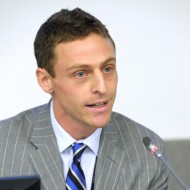
Conor B. French
A corporate attorney turned social entrepreneur, Conor French is the CEO of Indego Africa (IA) and a committed business partner to more than 500 women entrepreneurs in Rwanda. IA provides market access and educational opportunity to create jobs, promote sustainable livelihoods, and unlock economic growth in artisan sector communities in Rwanda.
Prior to joining IA, Mr. French practiced law at the global law firm of Latham & Watkins LLP. He represented public and private companies, investment banks, private equity firms, and investors in a wide range of leveraged finance and other capital-raising transactions. As pro bono counsel to Ashoka, Mr. French structured strategic partnerships that supported Ashoka’s global network of leading social entrepreneurs.
Mr. French is a Truman National Security Fellow, including serving as Operations Director in New York. He is a founding member of the Alliance for Artisan Enterprise, a private-public partnership between the U.S. Department of State and the Aspen Institute, and a member of the International Institute for Strategic Studies.
Mr. French frequently speaks on issues related to economic development, social innovation and impact, global partnerships, women’s empowerment, regional security, and non-profit leadership and management. He has been published in McKinsey & Co.’s What Matters, Ashoka’s Change Insight, and Deal Lawyers, and co-authored a chapter in Social Entrepreneurship in the Age of Atrocities (edited by Dr. Zachary D. Kaufman). Mr. French has been recognized by Diplomatic Courier as one of the most influential foreign policy leaders under 33, by Yoxi as a Social Innovation Rockstar, and by 85 Broads as a Guy Who Rocks.
Mr. French holds a B.A. in History and English from Georgetown University and a J.D. from New York University (NYU) School of Law, where he was an editor of the New York University Journal of International Law & Politics. Mr. French serves on the board of directors of NYU School of Law’s Alumni Association and on the New York State Bar Association’s Committee on Attorney Professionalism. He is qualified to practice law before the California, District of Columbia, Massachusetts, and New York bars.